How To Braid Hair With Extensions – The Ultimate 2026 Guide (Beautyfusionuk)
Braiding hair with extensions is a timeless and stunning way to add length, fullness, and versatility to your hairstyles. Yet despite the wealth of tutorials available online, many guides don’t go far enough — usually showing just a basic three-strand braid without addressing how to prepare hair and extensions properly, what products to use, how to maintain the style, how to avoid damage, or how to troubleshoot issues that beginners face.
In this complete guide from Beautyfusionuk, we break down everything you need to know to master braiding hair with extensions like a pro — suitable for beginners and experienced stylers alike.
Why Braid With Extensions?
Braids are not just beautiful — they’re practical. Adding extensions to your braid:
- Gives instant length and volume
- Allows you to experiment with textures and colours
- Helps protect your natural hair from daily manipulation
- Lets you create intricate and bold styles you couldn’t achieve with your natural hair alone
However, extensions are more than just “extra hair” — they require the right type, preparation, and care to braid successfully.
Types of Extensions You Can Braid With
Not all extensions are created equally when it comes to braiding. Here are the main types and how they affect your result:
Braiding Hair (Kanekalon / Synthetic)
- Best for box braids, knotless braids, feed-in braids.
- Affordable and light.
- Needs pre-stretching or boiling to soften.
Clip-In Extensions
- Great for simple braided hairstyles.
- Easy to add and remove.
- Not ideal for tight cornrows or styles that require secure attachment.
Human Hair Extensions
- Give the most natural look and movement.
- Can be styled with heat.
- Must be secured carefully to avoid slipping.
Sew-In (Weft) Extensions
- Excellent for more advanced braided styles like layered cornrows or Fulani braids.
- Require either a professional or some sewing skill to secure.
Preparing Your Hair & Extensions (The Secret To Success)
Most tutorials jump straight into the braiding process — but preparation is the foundation every pro braider uses:
Step 1: Start With Clean, Conditioned Hair
Wash and condition your hair thoroughly to remove product build up and tangles. Clean hair makes smoother, longer-lasting braids.
Step 2: Moisturize and Detangle
Use a leave-in conditioner or moisturizer to make your hair flexible and easy to part. Gently detangle with a wide-tooth comb or detangling brush.
Step 3: Blow-Dry or Stretch Hair
Hair that is stretched (blow-dried or banded) is easier to braid and blends better with the extension hair.
Step 4: Prepare Extensions
- Synthetic braiding hair: pre-stretch and soften by soaking in warm water
- Human hair: brush, trim split ends, and organise by length
- Clip-ins: test clip placement before you start
Step 5: Choose Your Tools
Gather:
- Rattail comb (for precise parting)
- Hair clips
- Elastics or braid bands
- Hair gel or edge control (optional)
- Light hairspray (optional)
- Moisturizer or oil for ends
Braiding Techniques with Extensions
Below are essential techniques most top articles under-deliver on — with clear steps and styling tips.
Basic Three-Strand Braid With Extensions
- Divide your hair (and extensions) into three even sections.
- Start near the roots, placing the extension hair with your natural hair in each section.
- Cross the right section over the middle, then the left over the middle.
- Continue until you reach the ends.
- Secure with an elastic.
Feed-In (Seamless) Braids
Feed-in braids gradually add extension hair as you braid, creating a seamless, natural look. Start with small pieces of braid hair, adding more as you go along the braid — blending with your own hair.
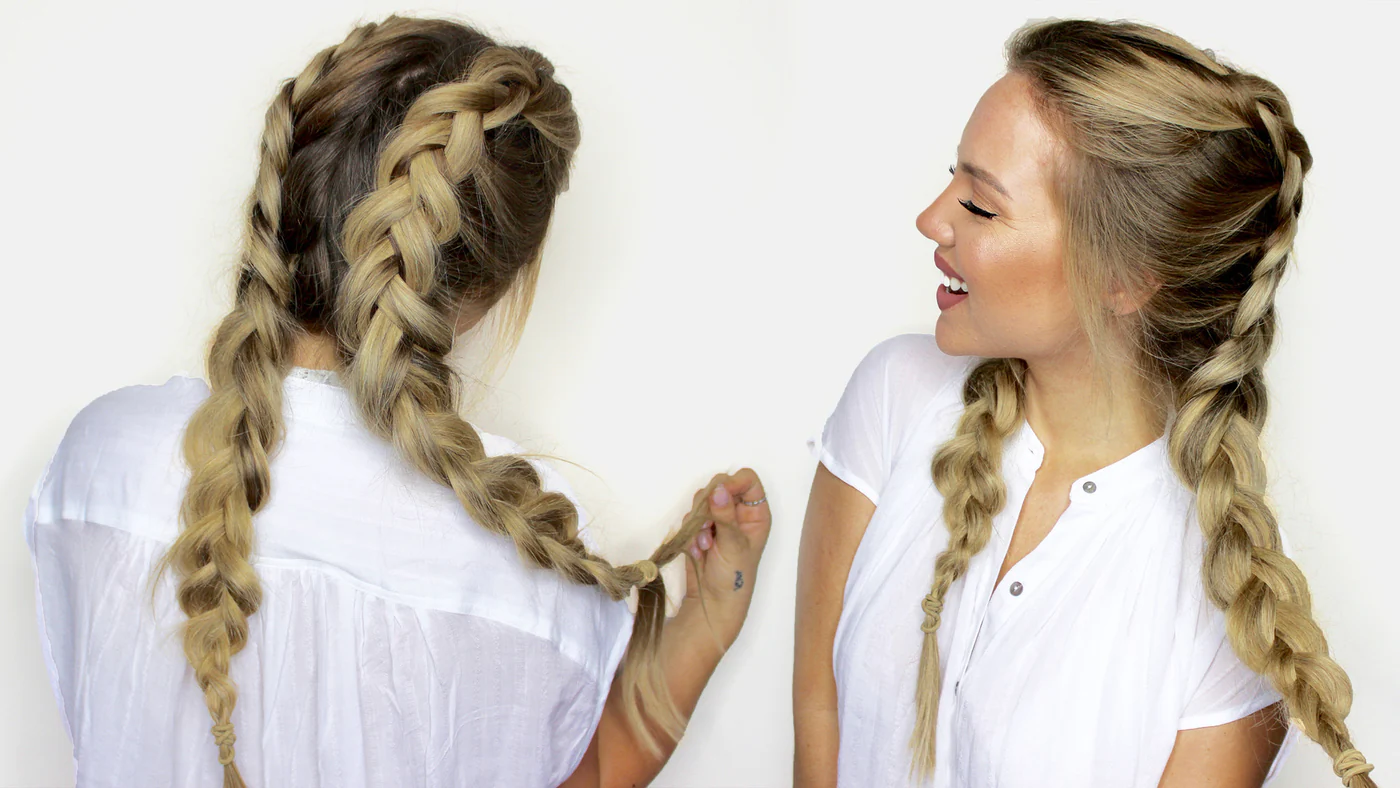
Dutch Braids With Extensions
Dutch braids are inside-out braids that pop forward. Prepare sections, insert extensions chunk by chunk, and braid by crossing hair under the centre strand.
Cornrow Braids & Fulani Styles
These require firm parting lines and consistent tension. Extensions are fed in at the scalp level, ensuring a smooth transition from your hair to the extensions.
Fishtail Portal Extensions
This advanced style involves dividing hair into two sections and alternately crossing small strands over. Extensions need to be thin and even to prevent bulkiness.
Common Mistakes And How To Avoid Them
Beginners often struggle — so here are the typical pitfalls most articles don’t cover:
Braiding Too Tight
Braids that are too tight can strain your scalp and lead to breakage or traction alopecia — a condition caused by chronic hair pulling. Always keep tension firm but gentle.
Using The Wrong Extension Type
Heavy or unblended hair will make braids look unnatural and cause slipping. Select extension types that match your hair weight and texture.
Skipping Moisture
Dry hair breaks easily and doesn’t hold style well. Moisturise before and during braiding especially at the ends.
Uneven Parting
Uneven sections make braids look messy. Use a rattail comb and clips to part precisely.
Ignoring Aftercare
Without proper maintenance, braids can frizz and loosen unnecessarily.
Aftercare & Maintenance (Extending Your Style’s Life)
Braids with extensions can last weeks if cared for correctly. Here’s how:
Nightly Protection
Wrap your braids with a silk or satin scarf before bed or sleep on a satin pillowcase to reduce friction.
Moisturise Scalp and Hair
Light oils (like argan or jojoba) and leave-in conditioners can keep your natural hair beneath moisturised without making it greasy.
Cleanse Gently
Use diluted shampoo or braid spray to cleanse your scalp when needed.
Avoid Heavy Products
Heavy waxes or greases attract dust and build up, dulling the shine of your style.
Advanced Styling Ideas With Extensions
Once you master the basics, here are some creative styles to try:
Half-Up, Half-Down Braids
Add clip-in extensions for extra volume on just the top section.
Braided Crown With Extensions
Create a halo or crown braid that frames your face — using extensions to thickened, smooth lines.
Ombre Braids
Blend lighter extension colours at the ends for a fashionable ombre look.
Accessorised Braids
Beads, threads, cuffs, or ribbons can make simple braids stand out.
Troubleshooting Common Problems
My Extensions Slip Out
Too little grip or wrong extension type. Switch to pre-stretched braiding hair or shorten the extension length if it’s too long.
Braids Look Uneven
Practice parting and consistent tension. Work in front of a mirror or enlist help for back sections.
Hair Is Too Frizzy at the Roots
Apply small amounts of gel or edge control to smooth stray hairs.
Scalp Is Irritated
Loosen tension and ensure your base hair is moisturised before braiding.
Final Tips From Beautyfusionuk
- Start with simple styles and work up to more complex ones.
- Use extension hair that matches your texture — curly, wavy, straight.
- Practice makes perfect: each head of hair behaves differently.
- Never rush: careful braiding always looks better and protects your hair.
Braiding with extensions can be empowering, transformative, and fun — once you know how to prepare, execute, and maintain your style correctly.
With Beautyfusionuk ultimate guide, you can confidently create elegant braids that look stunning and last long — all while keeping your natural hair healthy and gorgeous.